I go through a lot of business-for-sale files, but every so often one stands out enough that, once I’ve finished reviewing it, I find myself thinking “this one is different.” This 20-ton-capacity ice production facility in Izmir was exactly that kind of file. What struck me on first look wasn’t actually the machinery or the capacity numbers. What struck me was seeing the traces of an operation that had been run with the same discipline, without interruption, for nine straight years. The financial records are clean, customer relationships are stable, and the brand recognition is genuine. I’m writing this piece to share exactly those details with you.
The Patience Behind a Nine-Year-Old Brand
Starting a business isn’t actually the hard part — the hard part is keeping it standing for years. This facility has operated in Izmir for nine years and, over that time, has become one of the region’s well-known ice brands. That’s easy to say, but understanding the effort behind it takes a bit more digging. Nine years means at least two or three rounds of equipment renewal, means striking a balance between losing and gaining customers on a regular basis, and means weathering a few economic fluctuations without faltering. The fact that the business is still active and profitable today is the clearest proof that it has come through all of these tests successfully.
To me, this is exactly what an investor should care about most. There’s a real difference in risk between a newly opened, untested business and one that has been through nine years of stress-testing. In the first case, everything rests on assumptions; in the second, you have concrete track record in hand. The numbers speak for themselves, the customer list speaks for itself, and the market reputation speaks for itself.
The Lifeblood of the Operation: A Low-Cost Distribution Model
One of the things that surprised me most while reviewing this facility was this: the majority of customers pick up the product directly from the site themselves. It might sound like a small detail, but speaking as someone who works in commercial real estate and business valuation, this single detail changes the entire profitability picture. Distribution is typically one of the most expensive line items for a production business — fuel, vehicle maintenance, driver costs, lost time. Since customers come to collect the product themselves at this facility, most of that burden disappears.
This also lightens the operational load of running the business. In an ice production business, planning early-morning distribution, optimizing vehicle routes, and managing delivery delays is a job in itself. Here, most of that workload simply isn’t there. For a new investor, that’s an advantage that also simplifies the day-to-day management of the business.
Why the Age of the Machine Fleet Matters So Much
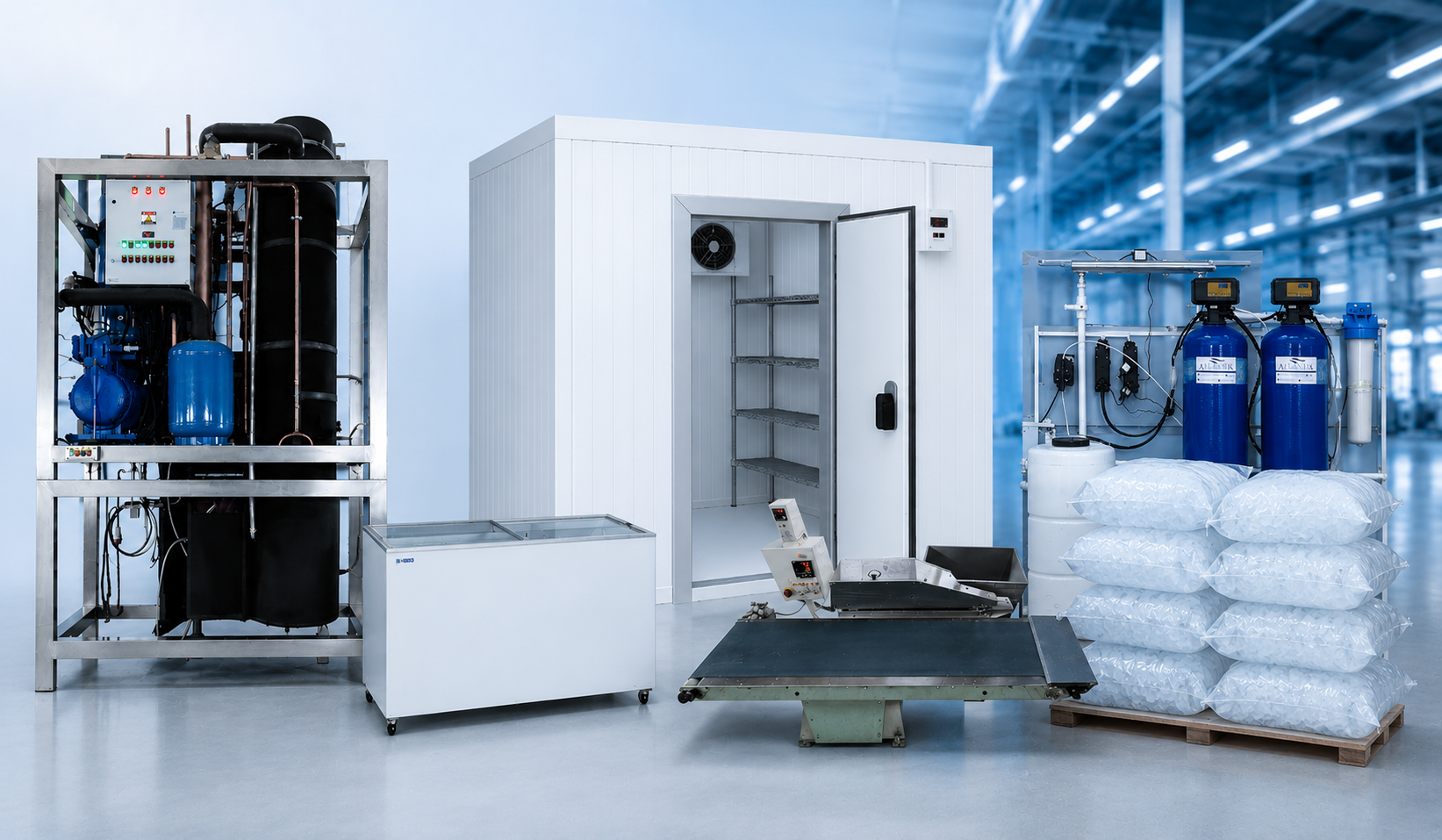
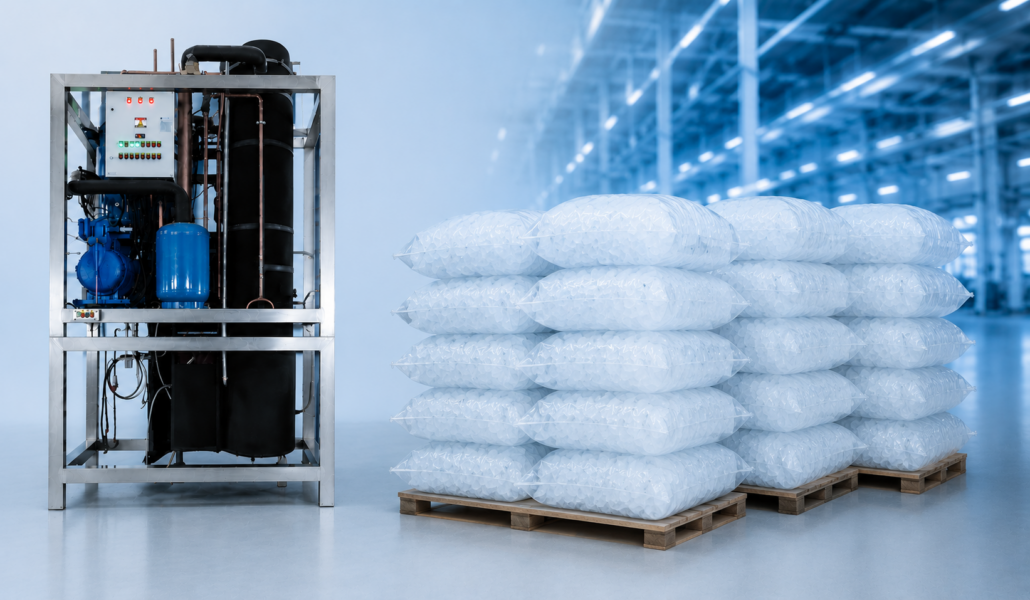
One of the first questions I always ask when looking at a business-for-sale is: how old is the equipment, and what does its maintenance history look like? An aging fleet prone to frequent breakdowns can look attractive on paper, but it comes back to bite the new owner as a hidden cost item. Here, the picture is the opposite. Of the five production machines, two are 2020 models, one is a 2024 model, and one is a 2025 model — meaning a significant portion of the fleet has been renewed in just the past few years. On top of that, the setup includes a 2024-model water treatment system, a 2023-model packaging line, and 2025-model cold storage units.
To me, this tells a clear story: the current owner overhauled and invested in the facility before putting it up for sale, making the business as trouble-free as possible for whoever takes it over. That’s a major relief for the buyer, since the first year after a takeover is usually when unexpected costs tend to surface. Here, most of that risk has already been eliminated in advance.
It’s Not Just Machinery Changing Hands — It’s an Entire Ecosystem
I want to stress this point specifically, because it often gets overlooked. In this sale, it’s not just physical equipment changing hands. The website, social media accounts, registered trademark rights, and the software actively used in the business are all included in the transfer. That means the new investor doesn’t have to build a digital identity from scratch — they start out with a site that already ranks in Google searches, social media accounts with an existing following, and a brand name whose registration process is already complete.
To appreciate how valuable that is, just consider the opposite scenario. If you tried to build an ice brand from zero, you’d spend months on trademark registration, then set up a website and wait for it to gain visibility on search engines, then work on organically building a social media following. That process can easily take a year and a half to two years, and it comes with a serious marketing budget along the way. Here, all of those stages are already behind you.
The Post-Transfer Relationship With the Property Owner
Another detail that put me at ease about this portfolio is that the current property owner has full command of the transfer process. A new lease agreement, in line with market rates for the area, will be arranged with the incoming operator, allowing the facility’s operations to continue without interruption. This eliminates one of the biggest sources of uncertainty commonly seen in business transfers. In some deals, the buyer has to renegotiate with the property owner only after taking over the business, and that process can sometimes drag on for months — occasionally with lease terms shifting in ways that strain the buyer’s budget. There’s no such risk here, since the terms have already been settled in advance.
The fact that financial records are kept in order on a daily, monthly, and annual basis is also a major plus for someone like me who works in this field as a consultant. Having concrete data on hand when doing a valuation or presenting a business to an investor directly boosts the credibility of the whole process. Transparent numbers make things easier for both the buyer and the seller.
Who Is This Investment Right For?
Finally, I want to say this: this facility is genuinely worth considering for investors who have a certain amount of capital and want to put it into a proven model that generates steady cash flow. It’s particularly well suited for people who don’t want to deal with the uncertainty of building a production business from scratch, but who do want to own a tangible asset in the manufacturing sector. Investors familiar with the Izmir region who have an interest in the cold chain and food sectors could find a quick fit with this business.
Of course, as with any investment decision, an on-site inspection, a detailed review of the financial records, and professional advisory support throughout the process are all necessary here as well. Official steps such as the site-viewing form and confidentiality agreement required under the Real Estate Trading Regulation are part of the process, serving as safeguards for both buyer and seller. If you’d like to see this facility in person, inspect the machine fleet, and go through the financial records together, feel free to reach out to me. Handing over the continuation of nine years of hard work to the right hands matters a great deal to me too.